Technology
The power upgrade refit technology can double the electrical output from Ontario's existing reactors and other similar reactors worldwide. The refit will also extend the useful life of existing nuclear generating stations while increasing safety, reducing fuel consumption, spent nuclear fuel and thermal emissions per megawatt of electricity produced.
The deployment of this technology involves modular replacement of the primary heat transport system (PHTS) and interfacing components that is not significantly different from activities undertaken during current mid-life refurbishment projects.
The substantial increase in power output is accomplished by using heavy water coolant at higher temperature and pressure than the existing reactors. The increase in power output results from a combination of higher thermal efficiency, a more even core power distribution and higher maximum channel powers.
Higher channel power is enabled by coolant at supercritical pressure, which is not subject to the dry-out and critical heat flux phenomena that limit channel power of the existing reactors. Fuel channel pairs are connected in series which helps even power distribution.
A HWR-3 reactor operating illustration is shown below.
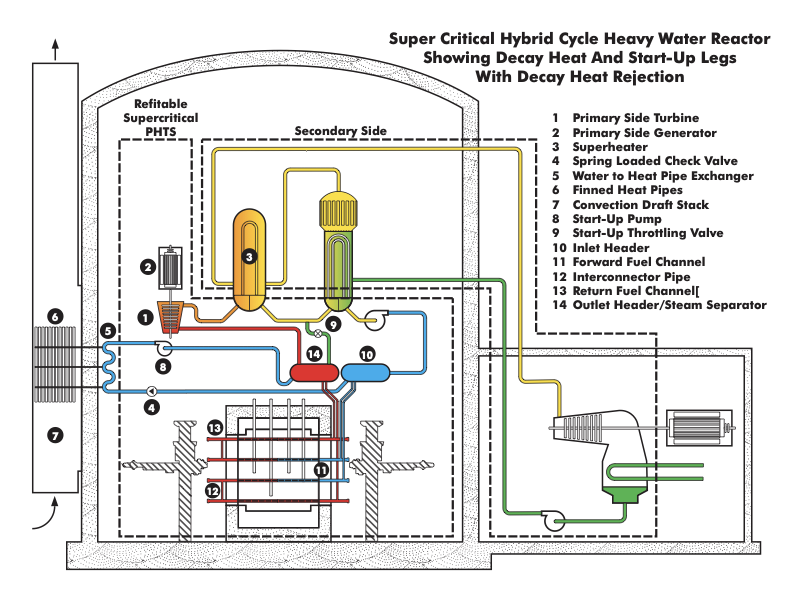
Figure 1: HWR-3 reactor operating illustration.
Click image to enlarge.
Technology Highlights
- Double the electrical output from Ontario's existing reactors and other similar reactors worldwide.
- Modular replacement of the primary heat transport system and interfacing components.
- Higher channel power enabled by coolant at supercritical pressure.
- Single crystal sapphire selected as the robust fuel structural material.
- Silicon carbide composite material selected for pressure tubes.
A key consideration for the refit concept is the ability to achieve space and layout compatibility with the existing plant. The refit PHTS has additional components not in the existing PHTS. These are two primary side turbines and generators, superheater-desuperheaters and optionally degassers. The additional space required for these components is compensated by reduced steam generator space made possible by higher heat transfer rates from operating the primary side in fully condensing mode. Each Ontario nuclear generating station has a different PHTS configuration requiring different layouts. Refit equipment and piping layouts have been developed for the Pickering NGS where the PHTS layout is constrained by the containment building.
The higher temperature and pressure of the refitted reactor PHTS requires stronger, higher temperature and corrosion resistant pressure boundary components.
Outside of the reactor core, the technology for these components is available from suppliers of systems and components for coal-fired supercritical water generating stations. Supercritical water coal-fired stations have been in existence since the 1950s and a mature engineering and component supply base exists.
The fuel channel and interfacing components are a different matter. The closure seal is unique to the PHWR reactor and needs to operate at much higher temperature and pressure than in the existing reactor. The fuel, pressure tube and a pressure tube insulator are exposed to radiation in addition to higher temperatures and pressures. These will require new materials. While the planned materials have irradiation experience, they have not been used in fuel channel components before. This will require substantial development efforts (link to development plan page).
Operating experience with existing Ontario reactors indicates that the fuel and the pressure tube will be key to reliable operation.
The first reactor using CANDU PHWR technology was the Nuclear Power Demonstration (NPD) reactor that went into operation in 1962 and the first commercial PHWR reactor was a Pickering A reactor that went into operation in 1970. While substantial operating experience was gained with these and subsequent reactors, operating rules were not fully established until the mid-1980s to achieve the current fuel reliability. This indicates the importance of focussing on fuel reliability.
The approach to the refit reactor fuel is to select a robust fuel structural material while minimizing other deviations from existing PHWR fuel. A new fuel structural material is needed because it is impossible to operate the existing fuel Zircaloy-4 material at the high temperature and aggressive corrosion conditions of the refit coolant. The selected material is single crystal sapphire, a form of aluminium oxide. This material was selected because of its relatively high strength, high elastic constant, very high oxidation corrosion resistance, largely known reactor irradiation properties, relatively high thermal conductivity, good thermal and irradiation expansion compatibility with uranium dioxide fuel, acceptable fracture toughness and thermal shock resistance, relatively low thermal neutron absorption and high thermal radiance transparency. The fuel pellet and fuel bundle geometry are based on designs proven through existing reactor operating experience.
The pressure tubes were known to undergo irradiation-induced deformation and degradation since testing in the 1960s. Full knowledge of the mechanisms giving rise to degradation developed slowly and several pressure tube failure incidents occurred in the 1980s that disrupted unit operation. It is important to ensure a good understanding of the refit pressure tube in the reactor operating environment.
The pressure tube material is a silicon carbide composite material that has undergone significant irradiation testing for possible use for light water reactor fuel cladding, boiling water reactor channel boxes and fusion reactor applications.
Further details of the refit reactor technology are available in the following research papers:
Research Papers
Current Pressurized Heavy Water Reactors (PHWRs) have thermal efficiencies of about 30%. A significant increase in thermal efficiency can be obtained by operating at higher temperatures using supercritical water coolant. Supercritical water cycles have not been used in nuclear power plants due in part to the in-core high neutron absorption and material degradation of high temperature alloys typically used in thermal plants. This paper examines the replacement of the primary heat transport system (PHTS) and fuel channels in an existing PHWR with a supercritical heavy water PHTS. The in-core materials, thermal hydraulics and passive safety heat transfer are described. The out of core main heat transport loop is described including integration of the primary side high pressure turbine and interfacing with the plant main steam system. A benchmark application is examined resulting in a 100% increase in electrical output.
View file
The power output of current Pressurized Heavy Water Reactors (PHWR) can be doubled by refitting them with a higher temperature and pressure primary heat transport system. The refit involves a modular replacement of the primary heat transport system and fuel channels that requires work similar to the work undertaken during current refurbishments. While the refit fuel channels interface similarly with the existing reactor calandria, there are differences between the refit and existing reactors that result from different coolant conditions, fuel enrichments, fueling scheme and in-core materials. The WIMS 3.1 code is used for generation of the irradiated fuel compositions of PHWR fuel bundles by using the "endregion" modelling capability or by "smearing" the fuel bundle materials over the entire bundle length. Both approaches are used to model the refit bundle and compare against MCNP 6.2 models. The comparisons indicate that the "smearing" method results in a less accurate reactivity estimate, whereas agreement with the detailed MCNP 6.2 fuel bundle is improved significantly by using the "endregion" modelling capability.
View file
The power output of current Pressurized Heavy Water Reactors (PHWRs) can be doubled by refitting them with a super-critical heavy-water (SCHW) primary heat transport system (PHTS). The refit involves replacement of the PHTS, fuel channels' and fuel bundles' material with materials that can operate at higher temperatures than the existing PHWRs. The new fuel cladding material, single crystal sapphire, requires careful control of local power distributions to avoid fuel pellet clad interaction during normal operation and accident conditions. This paper describes a detailed MCNP model of half a bundle of the SCHW reactor. The model predicts radial and axial fuel composition and power distribution as a function of fuel burnup, from fresh fuel to exit irradiation. It provides insights into features unique to the refit reactor fuel, such as the use of two enrichments to limit local fuel power caused by end flux peaking and the use of Inconel springs to control fuel pellet gap spacing.
View file
Fuels for current water-cooled power reactors are primarily sheathed/clad in Zircaloy-4. While Zircaloy-4 has proven to be highly successful, it loses strength rapidly at temperatures above those of current reactor cooling systems. This makes Zircaloy-4 an unsuitable material for fuel sheath/cladding in a supercritical water-cooled reactor that operates at considerably higher coolant temperatures. Therefore, single crystal sapphire is being considered as a sheath/clad material for uranium oxide fuel in a supercritical water PHWR. This paper identifies sixteen damage mechanisms as being credible for the refit sapphire fuel. They are binned into three groups: thermal integrity, structural integrity, and compatibility with interfacing components. Even though some material properties of sapphire currently have uncertainties, we expect that a sufficiently robust detailed design of the sapphire fuel can be crafted for the refit reactor.
View file